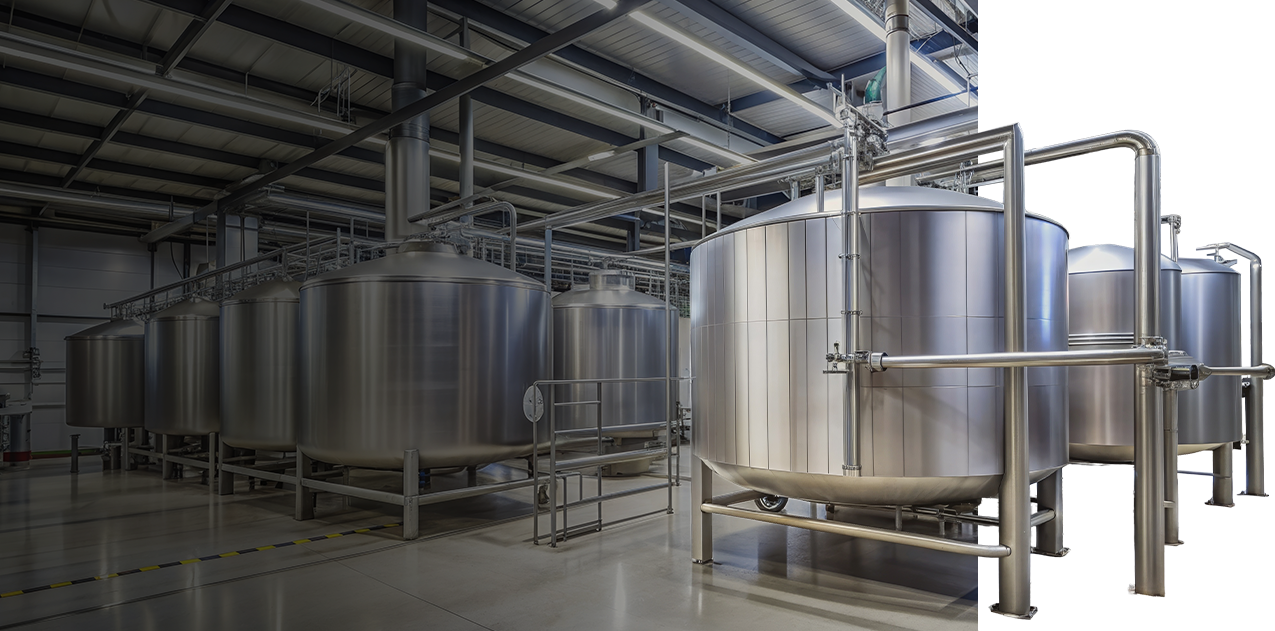
What is passivation?
In chemistry, passivation means treating a surface so that it becomes less chemically reactive. With metals, this usually means that a protective oxide layer forms and protects the base material from corrosion.
Why does stainless steel need to be passivated at all?
Many stainless steels are basically "self-passivating": chromium, and depending on the alloy nickel, reacts with oxygen and forms a thin protective oxide layer. In practice, however, this protection can be impaired, for example by:
- free iron (e.g. from tools, machining, media, contact)
- mechanical processing (grinding, blasting, polishing)
- welding (local heat, heat tint/scale)
- chloride-containing environments (e.g. salts, maritime air, bleach)
What does "passivating stainless steel" mean specifically?
In many applications, passivation primarily removes free iron chemically from the surface, typically with an acidic solution. This keeps the corrosion-resistant alloying elements, such as chromium/nickel, available at the surface and allows them to form a stable protective layer. This definition is reflected, among others, in ASTM A-967 and AMS2700.
Why should passivation be the final process step?
The passive oxide layer can be disturbed again by further processing. Therefore, the sequence is often:
Cleaning → (if necessary: pickling/removing heat tint) → Passivation → Rinsing/drying
This prevents the passive layer from being damaged or contaminated again immediately.